
When to Get Moles Checked | The Complete Guide to Early Detection and Skin Health
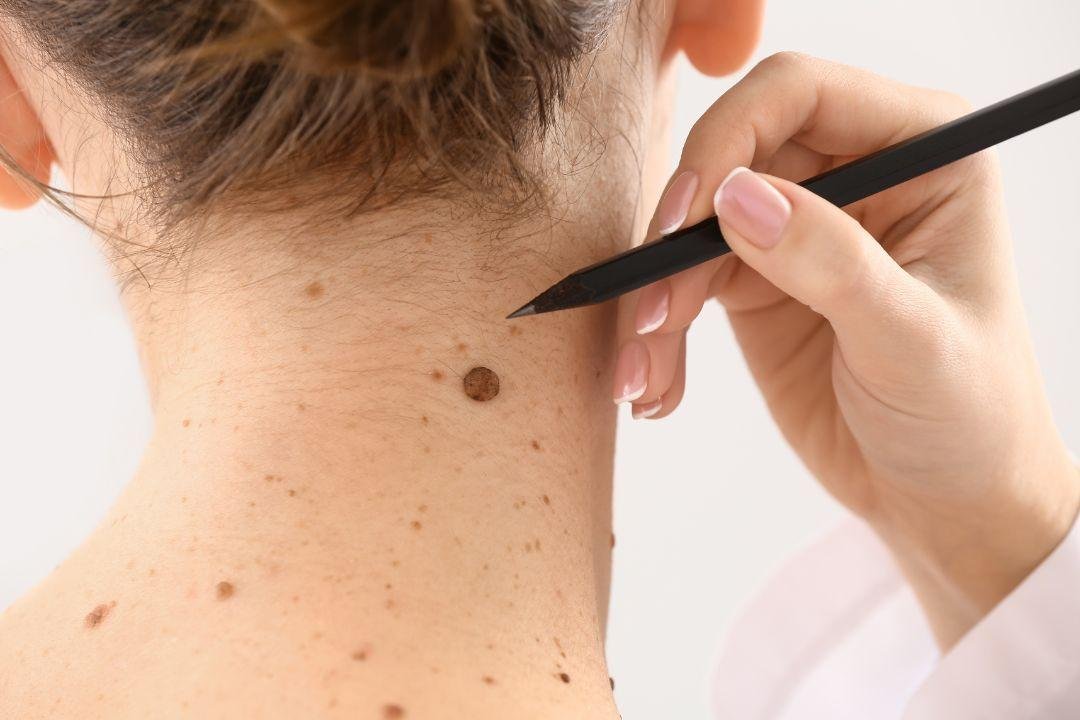
Skin cancer affects 1 in 5 Americans by age 70, yet melanoma survival reaches 99% with early detection. While most moles are harmless, knowing when to get moles checked is vital. Routine self-checks save lives by catching skin cancer warning signs early.
This guide teaches you to identify a suspicious mole, understand risks, and know what to expect at the dermatologist.
Take a moment to scan your skin for changing spots as you read!
Understanding Moles: The Basics
What Is a Mole?
A mole, medically known as a nevus, is a benign cluster of pigment-producing cells called melanocytes. They develop when these cells grow in clusters instead of spreading evenly across your skin.
Typically, normal moles appear as small, round, or oval brown, tan, or flesh-colored spots. They usually have a smooth surface and distinct, even borders. The number of moles you have varies greatly from person to person, largely depending on your genetics and lifetime sun exposure.
Types of Moles
Not all moles are created equal. Understanding the different types can help you and your dermatologist monitor your skin more effectively:
- Common (acquired) moles: These develop after birth and are the standard moles most people have. They are generally harmless.
- Congenital moles: These are present at birth. Larger congenital nevi carry a slightly higher lifetime risk of turning into melanoma.
- Atypical (dysplastic) moles: Also known as dysplastic nevi, these are larger than average, have irregular borders, and feature mixed colors. They have a higher risk of becoming cancerous.
- Spitz nevi: These are often pink, raised, and dome-shaped. They are most common in children and can sometimes resemble melanoma.
- Blue nevi: These moles get their blue tint because the pigment cells are located deeper in the skin. They are almost always benign.
Why Do People Get New Moles?
Most people stop developing new moles by age 20 or 30. However, new moles can still appear later in life due to genetics, hormonal shifts, or UV radiation exposure.
While a new mole in childhood or young adulthood is usually harmless, a new mole in adulthood (especially after age 30) deserves closer attention. Studies suggest that any new pigmented lesion appearing later in life should be evaluated by a professional to rule out skin cancer.
Why Getting Moles Checked Matters: The Link to Skin Cancer
Overview of Skin Cancer Types
Skin cancer includes several types, each with different behaviors:
- Melanoma: Originates in melanocytes and can spread quickly if not caught early. It is the most dangerous form.
- Basal cell carcinoma: The most common type; it grows slowly and rarely spreads but can cause local damage.
- Squamous cell carcinoma: Often linked to sun exposure; can spread if untreated.
- Precancerous lesions (such as actinic keratoses): These can sometimes progress to cancer and should be evaluated.
Regular dermatologist mole checks and skin cancer screening help identify these issues at treatable stages.
Benefits of Early Detection
When melanoma is detected early, treatment is often highly successful with minimal intervention. Studies show that early-stage melanoma has excellent outcomes compared to cases where it has spread.
Many people who act promptly on changing moles report better peace of mind and simpler management. Early action through skin lesion evaluation supports the best possible results.
The ABCDE Rule: Your Visual Checklist for Suspicious Moles
Dermatologists recommend using the ABCDE rule during your skin self-examination. This simple framework helps you identify signs of a dangerous mole quickly and accurately.
A – Asymmetry
Draw an imaginary line through the center of the mole. If the two halves do not match, the mole is asymmetrical. Benign moles are typically perfectly round and symmetrical.
B – Border Irregularity
Pay close attention to the edges. Melanoma symptoms often include borders that are irregular, scalloped, notched, or poorly defined. A normal mole usually has smooth, even, and well-defined borders.
C – Color Variation
A healthy mole is usually a single, even shade of brown or tan. Be wary of a mole with multiple shades of brown, black, or tan. In some cases, patches of red, white, or blue within a pigmented lesion are also major warning signs.
D – Diameter
As a general rule, a suspicious mole is larger than 6 millimeters across—about the size of a pencil eraser. However, it is important to note that early melanomas can sometimes be smaller than this benchmark.
E – Evolving (The Most Important Sign)
Any change in a mole’s size, shape, color, or elevation is a major red flag. If a spot is evolving over weeks or months, it requires a professional skin lesion evaluation.
Helpful Tip: During your monthly checks, use this simple mental checklist: Is it Asymmetrical? Are the Borders uneven? Is the Color mixed? Is the Diameter large? Is it evolving? If you answer “yes” to any of these, schedule an appointment.
The “Ugly Duckling” Sign: When a Mole Stands Out
The Ugly Duckling sign is a modern, highly effective concept used in mole screening. It is based on the observation that most normal moles on your body will resemble one another.
If you have mostly small, light-brown, round moles, a single dark, large, or irregularly shaped mole is your “ugly duckling.” This standout mole should be evaluated by a dermatologist, even if it does not perfectly fit the ABCDE criteria. Trust your instincts, if a spot looks distinctly different from the rest, it is time to get it checked.
Beyond the ABCDEs: Physical Symptoms That Mean “Check Me Now”
While visual changes are crucial, mole cancer symptoms also include how a spot feels. Do not ignore physical changes in your skin.
Itching, Tenderness, or Pain
A mole that suddenly becomes itchy, tender, or painful to the touch is a warning sign. While benign moles can occasionally itch due to dry skin or friction, persistent or localized discomfort warrants a professional look.
Bleeding, Oozing, or Crusting
If you bump a mole, it might bleed. However, a mole that bleeds spontaneously, oozes, or forms a scab that will not heal is highly suspicious. Unexplained bleeding should never be ignored, as it is a common skin cancer warning sign.
Texture Changes
Pay attention to the surface of your moles. A spot that becomes unusually scaly, rough, crusty, or develops a new raised bump or nodule requires attention.
The EFG Rule for Nodular Melanoma
Some aggressive melanomas do not follow the ABCDE rule. Instead, dermatologists use the EFG rule to identify nodular melanoma:
- Elevated: The mole is raised above the skin surface.
- Firm: The spot feels hard or firm to the touch.
- Growing: The mole is growing rapidly over a few weeks.
Other Warning Signs
Keep an eye out for other subtle changes. A non-healing skin lesion, persistent crusting, or surrounding redness and swelling are all concerning. Additionally, a new dark streak under a fingernail or toenail (not caused by an injury) should be evaluated immediately.
Specific Situations That Require a Mole Check
A New Mole Appears After Age 30
While new moles can occasionally appear, they are less common in adulthood. A new pigmented lesion after age 30 is a common reason for mole examination.
Most are benign, but evaluation provides reassurance or early insight.
A Mole Grows Rapidly
Moles that enlarge noticeably over weeks or months differ from the very slow changes that can occur naturally. Rapid growth is a key sign to address.
Multiple Changes in One Mole
When a single mole shows several concerning features at once, such as size increase plus color or border changes, it is especially important to seek professional assessment.
How Often Should You Check Your Moles?
Establishing a routine is the best way to catch skin cancer warning signs early. Here is how often you should perform mole monitoring.
Monthly Self Skin Exams
Every adult should perform a skin self-examination once a month. Regularly mapping your skin helps you become familiar with your baseline, making it much easier to spot a new or abnormal mole.
Annual Professional Skin Examinations
For the average person, an annual skin cancer screening by a professional is the recommended baseline. A yearly dermatologist mole check ensures that any subtle changes you might have missed are caught by a trained eye.
High-Risk Individuals May Need More Frequent Checks
If you have a family history of melanoma, numerous moles, or a weakened immune system, annual checks are not enough. High-risk individuals should consult their doctor for mole screening every 3 to 6 months. Children with high-risk factors should also begin professional evaluations early.
Situational Triggers for Immediate Checks
You should schedule an immediate skin lesion evaluation if you experience a severe, blistering sunburn, notice significant changes during or after pregnancy, or simply spot a change during your monthly self-exam.
What to Expect During a Professional Mole Check
Knowing what happens during a dermatologist’s mole check can ease any anxiety you might feel.
Before the Appointment
Your doctor will review your medical and family history. Be sure to bring a list of any medications you take and note any specific spots that concern you.
The Examination Process
The doctor will perform a total body skin examination, checking every inch of your skin. They will use dermoscopy, a specialized magnifying tool with a light, to evaluate subsurface structures. Some clinics also offer digital mole mapping to track changes over time.
If a Mole Looks Suspicious: The Biopsy Process
If a spot looks concerning, the doctor will perform a mole biopsy. This quick, in-office procedure involves removing a small tissue sample using a shave, punch, or excisional method.
Note on risks: While generally safe, biopsies carry minor risks such as bleeding, infection, or scarring at the site. Your doctor will provide clear aftercare instructions to minimize these complications.
Understanding the Results
Pathology results typically take a few days to a week. A follow-up appointment is crucial to discuss the findings and determine the next steps if cancer is detected.
Derm vs. Primary Care: When to See a Specialist
While primary care doctors can perform basic checks, a board-certified dermatologist is the best choice for comprehensive mole screening, especially if you have an atypical mole or a high-risk profile.
What to Expect During a Professional Mole Check
Knowing what happens during a dermatologist’s mole check can reduce anxiety and help you prepare.
Before the Appointment
Your provider will review your medical history, including any family history of skin cancer, sun exposure habits, and changes you have noticed. Bring notes or photos of concerning moles to support accurate skin lesion evaluation.
The Examination Process
A typical visit involves a full-body skin examination in a private setting. The dermatologist will use dermoscopy, a handheld magnifying tool with light, to examine pigmented lesions more closely.
In some cases, digital mole mapping or total body photography may be used for ongoing monitoring, especially for those with many moles.
If a Mole Looks Suspicious: The Biopsy Process
If a mole or skin lesion needs further evaluation, a biopsy may be recommended. This is a quick, in-office procedure performed under local anesthesia:
- Shave biopsy: The top layers are removed.
- Punch biopsy: A small circular tool removes a deeper sample.
- Excisional biopsy: The entire mole is removed with a small margin of surrounding skin.
The process is usually brief, and your provider will explain what to expect. Mild discomfort, bleeding, or scarring are possible, as with any minor procedure; discuss risks with your doctor.
Understanding the Results
Pathology results typically return within a few days to a couple of weeks. Your dermatologist will discuss findings and next steps clearly. Follow-up is important, especially if further treatment is needed.
Derm vs. Primary Care: When to See a Specialist
While primary care providers can perform initial skin checks, board-certified dermatologists have specialized training in pigmented lesion assessment and are often preferred for comprehensive mole screening or suspicious findings.
Can Moles Be Removed?
Mole removal is sometimes recommended for medical or cosmetic reasons. Decisions should always be made with your dermatologist.
Medical Reasons for Removal
Suspicious moles may be removed for biopsy to rule out melanoma or other concerns. Moles in high-friction areas (that catch on clothing or bleed easily) or those in high-risk individuals may also be considered for removal as a preventive step.
Cosmetic Removal
If a mole bothers you aesthetically and shows no concerning features, removal may be an option after professional evaluation. Discuss expectations, as scarring can occur.
Removal Methods
- Surgical excision: The mole and a margin of skin are cut out and stitched—often used for deeper or suspicious lesions.
- Shave removal: The mole is shaved flush with the skin—suitable for certain raised, non-suspicious moles.
Recovery varies but often involves keeping the area clean, avoiding sun exposure, and following wound care instructions. Your provider will explain potential side effects, such as infection risk or pigmentation changes.
When Should You See a Dermatologist Immediately?
Do not wait for a routine appointment if you notice any of the following:
- A rapidly changing mole
- Bleeding or oozing without injury
- Persistent itching, pain, or tenderness
- A dark streak under a fingernail or toenail
- A new pigmented lesion after age 30
- A mole that looks noticeably different from your others (Ugly Duckling sign)
- A non-healing sore lasting several weeks
- Any mole showing ABCDE signs or other skin cancer warning signs
Prompt evaluation supports early melanoma detection and better outcomes. When in doubt, it is always better to have a professional assess it.
Conclusion
Knowing when to get moles checked starts with paying attention to your skin and recognizing changes early. Use the ABCDE rule, watch for the Ugly Duckling sign, perform monthly skin self-examinations, and schedule routine professional skin checks based on your personal risk factors. Most moles are harmless, but prompt evaluation of a changing or unusual mole can make a meaningful difference in early detection.
Don’t leave your skin health to chance. If you’ve noticed a changing, itching, bleeding, or unusual mole, schedule an appointment with a board-certified dermatologist. Taking action early can improve outcomes and provide peace of mind. Consider sharing this information with family and friends so they can protect their skin health as well.
Medical Disclaimer: This content is for informational and educational purposes only and is not a substitute for professional medical advice, diagnosis, or treatment. Always seek the guidance of a qualified healthcare provider regarding any concerns about your skin or overall health. Never ignore or delay seeking medical advice because of information you have read online.